 By Sunday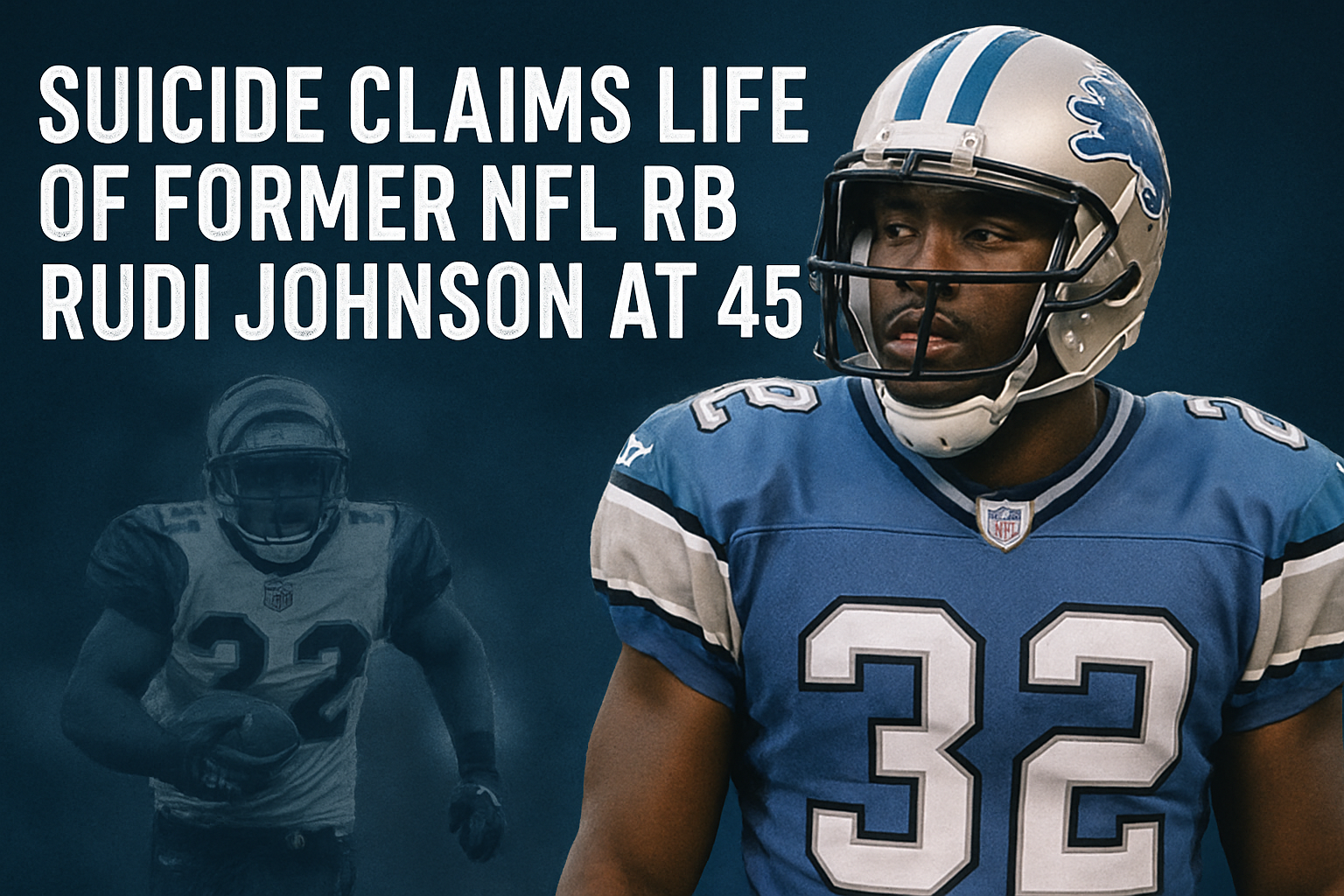
The NFL community is in mourning following the tragic news of Rudi Johnson’s death. The former Detroit Lions and Cincinnati Bengals running back died by suicide in Florida just after midnight on Tuesday, according to reports. Johnson would have turned 46 next week.
A Career Built on Power and Consistency
Johnson made his mark at Auburn before entering the NFL as a third-round pick in the 2001 draft. With the Cincinnati Bengals, he became a household name between 2004–2006, averaging nearly 1,400 rushing yards and 12 touchdowns per season. His bruising style and workhorse mentality made him a fan favorite in Cincinnati.
In 2008, he signed with the Detroit Lions — his final stop in the league. That season, injuries limited him to 14 games, where he still managed 237 rushing yards and two touchdowns. By the end of his NFL career, he had piled up 5,979 rushing yards and 49 touchdowns.
The Hidden Toll of the Game
While fans remember Johnson for his power on the field, reports point to a darker struggle off it. Published accounts suggest he battled mental health challenges connected to CTE, a brain disease linked to repeated concussions. It’s a sobering reminder of the lasting effects football can have on its players long after the stadium lights go out.
Remembering Rudi Johnson
Johnson wasn’t just a football player — he was a competitor who carried teams on his back, a teammate who earned respect, and a reminder of both the triumphs and the risks of professional sports. His story is a call to keep conversations about mental health alive, especially for athletes dealing with the aftermath of their careers.
If you or someone you know is struggling, help is available. Call or text 988 for the Suicide & Crisis Lifeline, available 24/7.