 By Sunday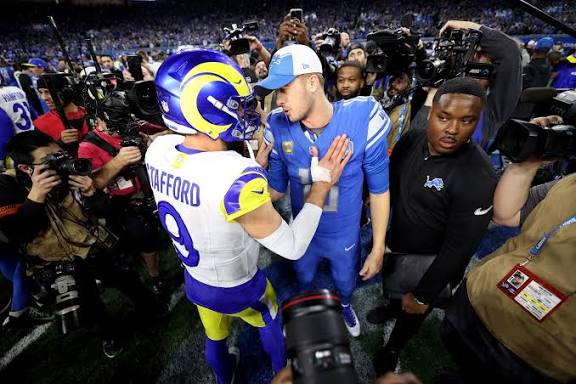
For more than a decade, the Matthew Stafford era in Detroit felt like a treadmill — plenty of motion, very little distance. Big arm, big numbers, big hopes… and yet the Lions never really moved anywhere meaningful. When Stafford walked into ownership’s office and effectively said, “I’m done,” it felt like a collapse.
Turns out, it was the spark.
Because Stafford leaving didn’t just end an era — it opened the door to the Lions team we see today.
A Franchise Stuck in the Same Old Loop
Let’s be real: the Lions were going nowhere fast. Stafford delivered highlight throws, sure. “Look-off defenders, laser into a tight window” was his signature magic trick. But so was the other thing — the brutal, perfectly timed interception right when Detroit needed the opposite.
Three playoff appearances in 12 years. Zero wins. Year after year of coming up short, and yet somehow still stuck clinging to the idea that maybe next year would be different.
It never was.
When Stafford finally asked out, he walked out with more than just a trade request. He carried out the identity of the “Same Old Lions”—a talented but incomplete team that never figured out how to win when it mattered.
The Trade That Changed Everything
Enter Brad Holmes, a GM who arrived with a blueprint and a sense of timing. Suddenly, Detroit wasn’t just losing a quarterback — it was gaining options.
Draft picks. Flexibility. A chance to reshape the roster with players who could become cornerstones.
That’s exactly what happened.
- Penei Sewell
- Amon-Ra St. Brown (“Saint”)
- Foundational trench pieces
- Cap space and a fresh direction
And at the center of it all?
Jared Goff: The Quarterback Detroit Didn’t Know It Needed
Goff wasn’t the shiny centerpiece of the Stafford deal — he was the castoff, the guy Sean McVay blamed for the Rams’ offensive sputters. But in Detroit? He became something Stafford never could quite be:
A steady, mistake-averse, team-first quarterback.
The Lions didn’t need a magician. They needed someone who could run the offense, play clean football, and give a rebuilding team a fighting chance. Goff became the calming presence during the storm — the guy who stabilized a franchise that desperately needed breathing room.
And suddenly, Detroit could build. Slowly. Patiently. Properly.
Dan Campbell’s Take: A Win-Win (But Mostly a Win for Detroit)
When Dan Campbell was asked whether the trade was a win for both sides, he didn’t dodge the truth:
“I know on our end we’re fortunate to have the guy we have and to get all that we were able to get.”
He mentioned Sewell. He mentioned St. Brown. And of course, he mentioned Goff.
Campbell didn’t have to oversell it — the results speak for themselves.
Stafford: A Polarizing Return, A Revealing Contrast
When Stafford returned to Ford Field, the boos weren’t just for him — they were for an era fans were ready to bury. He represented heartbreak, inconsistency, and the always-too-late turnover that sucked the life out of games.
Goff represents something Stafford rarely did: trust.
The kind of trust you need when your season hangs in the balance and you cannot afford a handful of gift-wrapped interceptions.
From “Same Old Lions” to Something Real
Stafford wasn’t the villain. He was the final page of a book that needed to end.
Detroit used that ending to write a better one — one with commitment, leadership, and a roster built from the trenches out. One where the quarterback doesn’t need to look like Superman to win.
Stafford leaving didn’t break the Lions.
It finally freed them.