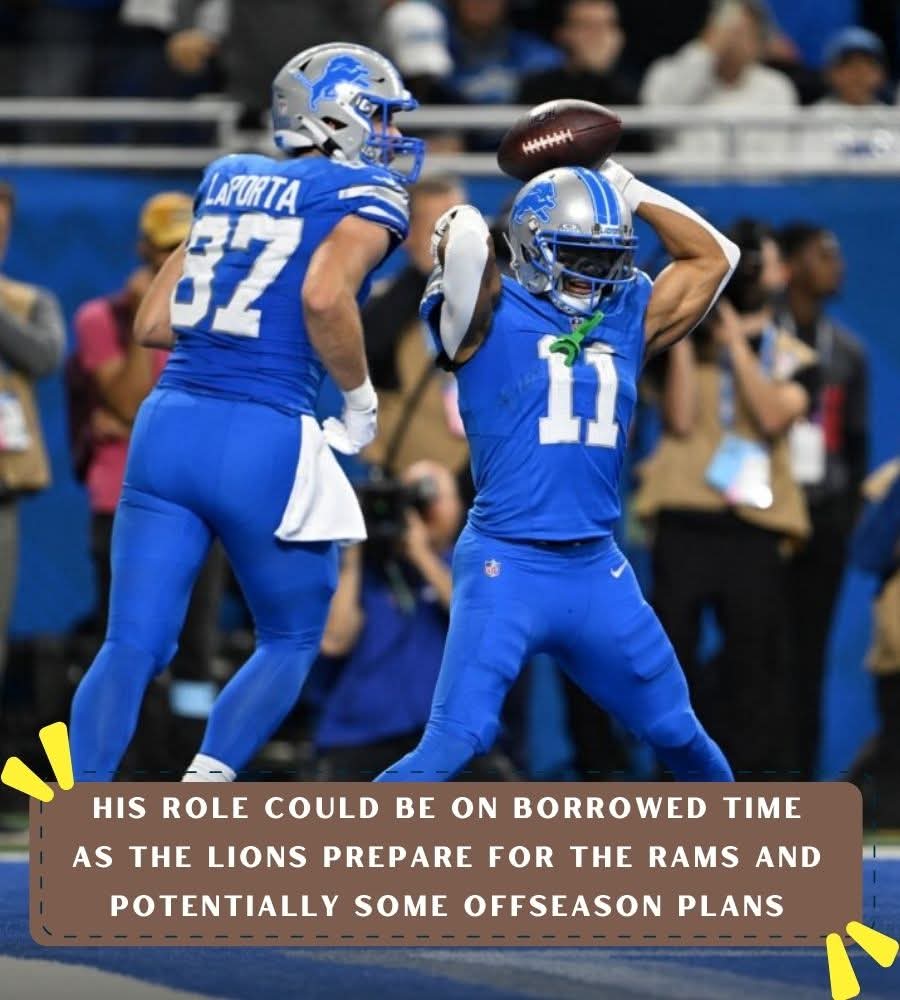
Change is unavoidable in the NFL, and the Detroit Lions are once again facing one of the hardest parts of roster building — moving on from a respected, well-liked veteran whose time in Detroit may be nearing its end.
Even when a player remains productive and beloved in the locker room, the league’s salary cap constraints, age curves, injury history, and youth movement often force front offices to make uncomfortable decisions. Detroit is no exception.
Why the Lions Are at a Crossroads
The Lions’ recent rise has been fueled by smart drafting and a commitment to building sustainably. That approach, however, comes with difficult trade-offs. As younger players demand extensions and core contributors take on larger roles, veteran contracts come under sharper scrutiny.
In this case, the veteran in question has provided:
Leadership and experience
Consistent effort and professionalism
A strong connection with the fanbase
But football decisions are rarely emotional.
The Salary Cap Reality
Detroit is approaching a period where financial discipline matters more than ever. With stars entering contract years and young talent emerging at key positions, every dollar allocated to a veteran must be justified against future flexibility.
Even modest cap savings can:
Help extend foundational players
Create room for free-agent depth
Allow flexibility at the trade deadline
That reality often outweighs sentiment.
On-Field Impact vs. Long-Term Planning
While the veteran may still contribute, the Lions must evaluate:
Whether younger players are ready to step up
If the production justifies the cost
How the roster projects over the next two seasons
Detroit’s coaching staff has shown trust in developing talent, and this could be another moment where they choose growth over familiarity.
What This Means for the Locker Room
Letting go of a respected veteran is never easy. But the Lions’ culture — built on accountability, competition, and forward momentum — allows them to navigate these transitions without fracturing trust.
If this is indeed the end, it would mark not a failure, but a natural evolution of a team shifting from rebuilding to sustaining success.
Bottom Line
The Lions aren’t pushing a player out — they’re making a business decision rooted in long-term vision. Whether through release, trade, or quiet departure after the season, signs point toward a change that reflects where Detroit is headed.
Sometimes, progress requires painful goodbyes.
UPDATE: Lions Preparing for Inevitable Farewell to Veteran Fan Favorite