 By Moses Joshua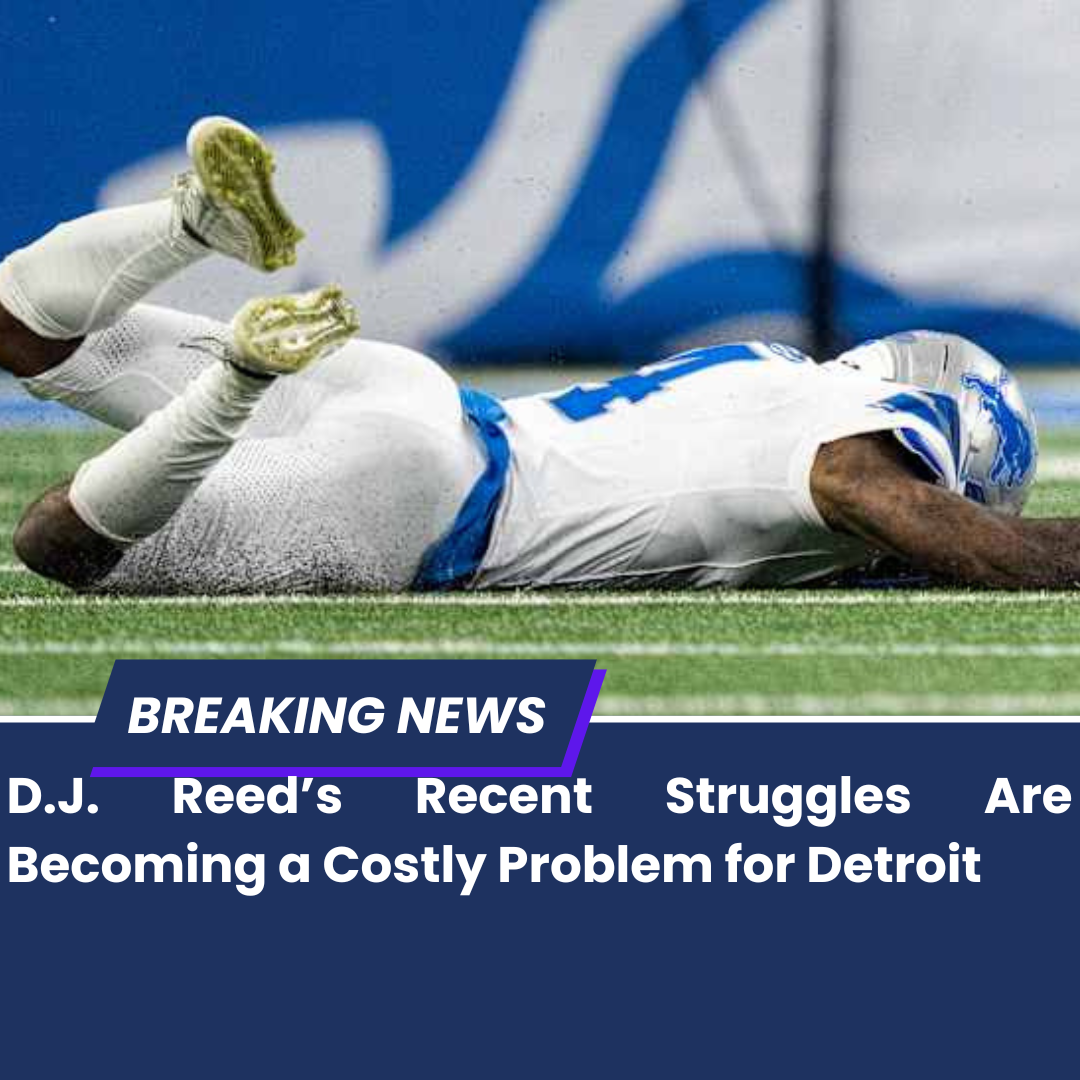
With the playoffs slipping away, the Lions’ battered secondary can’t afford instability at CB1
Panic isn’t just creeping into Detroit—it’s settling in. After a 41–34 loss to the Los Angeles Rams, the Lions have reached the point of no return: win out, or watch the postseason from home. Sitting eighth in the NFC with fading odds, Detroit’s margin for error has vanished. And at the center of the concern is a secondary that’s unraveling at the worst possible time.
More specifically, the Lions are running out of answers at cornerback. D.J. Reed, brought in to stabilize the defense and elevate the unit, is struggling—and the timing couldn’t be more damaging.
A Secondary Suddenly Under Siege
Matthew Stafford’s return to form against Detroit wasn’t subtle. He carved up the Lions’ defense for 368 yards and two touchdowns, continuing a troubling trend. After holding opposing quarterbacks under 300 yards for much of the season, Detroit has now allowed an average of nearly 330 passing yards over its last four games, including three 300-yard performances.
Injuries have played a role, but performance has too.
Since returning from injury, Reed hasn’t looked like the same player. Over his last three games, he’s surrendered 17 receptions for 272 yards and a touchdown, while also drawing four penalties. For a defense already stretched thin, those numbers are more than concerning—they’re unsustainable.
From Complement to Cornerstone—and the Weight That Comes With It
Reed was signed with the expectation that he’d form a strong tandem with rookie Terrion Arnold. When both were on the field, the pairing worked. In games where Reed lined up opposite Arnold, he allowed just 11 catches on 18 targets for 136 yards—solid production in a complementary role.
But football rarely goes according to plan.
With Arnold sidelined, Reed has been thrust into the CB1 role, tasked with shadowing elite receivers. The results have been starkly different. Without Arnold, Reed has allowed 13 receptions for 227 yards, struggling to hold up as the primary coverage defender.
Matchups against stars like CeeDee Lamb and Puka Nacua exposed that gap. Even acknowledging the caliber of competition, the eye test has been unforgiving. Reed hasn’t just been challenged—he’s been targeted relentlessly.
No Safety Net Behind Him
Normally, a team might rotate, scheme help, or look for alternatives. Detroit doesn’t have that luxury.
The Lions’ cornerback room is depleted, with multiple players already on injured reserve. Behind Reed, the options are limited and unconvincing. Amik Robertson has allowed 22 receptions on 33 targets over the past three games. Rock Ya-Sin has been steady at times but has just one pass breakup since Week 6. Avonte Maddox and Khalil Dorsey have barely seen the field and haven’t produced in meaningful snaps.
In short, there’s no cavalry coming.
Complicating matters further is what lies ahead. Detroit’s remaining schedule features a gauntlet of elite receivers, including DK Metcalf, Justin Jefferson, and Rome Odunze. Shuffling assignments or hoping to hide Reed elsewhere isn’t a realistic solution.
The Only Way Out Is Through
At this point, the Lions don’t need a schematic miracle—they need Reed to be better. Quickly.
That doesn’t mean perfection, but it does mean competing at the catch point, avoiding drive-extending penalties, and forcing quarterbacks to think twice before locking onto him. The Lions’ front seven can help by generating pressure and shortening throwing windows, but coverage still has to hold up.
Detroit’s season may hinge on whether Reed can snap out of his slump and reclaim the form that made him such an important offseason addition. There are no easy fixes, no depth-chart lifelines, and no time to wait for gradual improvement.
For the Lions to survive, D.J. Reed has to stabilize the defense—because right now, Detroit can’t afford another crack in an already fragile foundation.