 By Moses Joshua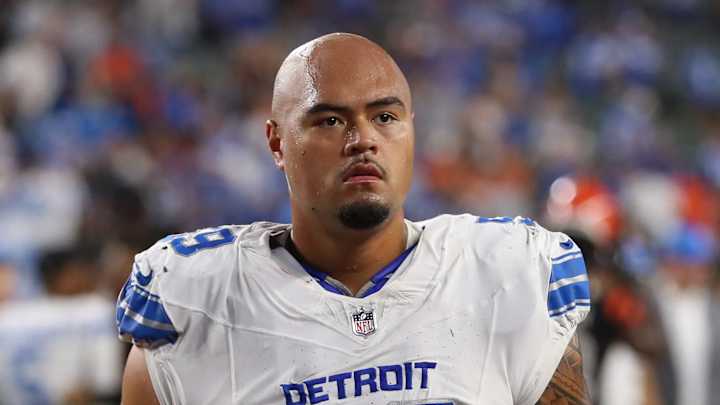
Detroit faces tough roster decisions as looming line changes and cap pressure force hard conversations ahead of the 2026 offseason program.
The Detroit Lions are entering a pivotal offseason, one that could quietly reshape parts of the roster long before training camp battles begin. With OTAs on the horizon, Detroit isn’t just looking to add talent — it’s evaluating who still fits into a roster built to contend, not merely compete.
Questions along the offensive line, uncertainty along the defensive front, and a tight salary cap mean that some familiar names may not make it to summer practices. Here are four Lions under contract whose jobs may not survive until OTAs.
Offensive Line Uncertainty Creates Immediate Pressure
Detroit’s offensive line has long been the backbone of the team, but cracks are beginning to show. The need for a long-term answer at center is obvious, and the situation at left tackle could soon become urgent with Taylor Decker strongly considering retirement.
Even if Decker returns, the Lions must think beyond 2026. That reality puts pressure on developmental players who were once viewed as future solutions but haven’t progressed fast enough to justify patience.
Giovanni Manu: Development Clock Ticking Loudly
Giovanni Manu’s name has surfaced frequently this offseason, and not for the reasons Detroit hoped.
The 2024 fourth-round pick was once viewed as a long-term tackle project, but his development has not reached the point where he can realistically be considered a successor to Decker. General manager Brad Holmes acknowledged as much, telling reporters it would be “unfair” to expect Manu to step into a starting left tackle role in his third season.
That comment was revealing.
If Manu isn’t ready to start — and isn’t even viewed as close — his roster spot becomes increasingly difficult to justify, especially if Detroit invests early draft capital at tackle this spring. Keeping a developmental lineman who can’t contribute while younger, higher-upside players arrive may simply not make sense.
Financially, the move is clean. A post–June 1 cut would save the Lions just over $1 million in cap space — modest, but meaningful for a team already projected to be in the red.
Pass Rush Depth Could Be Turned Over Quickly
Detroit’s edge group faces its own questions. With Al-Quadin Muhammad headed for free agency, the Lions are staring at a thin rotation behind Aidan Hutchinson. If the front office determines the answers aren’t already in-house, that decision will ripple through the roster.
Depth pass rushers who haven’t carved out consistent roles could quickly find themselves expendable, especially if Detroit prioritizes adding proven pressure help in free agency or the draft.
OTAs often reveal which defenders are viewed as placeholders — and which are already being phased out.
Cap Reality Will Force Tough Calls
The Lions don’t have the luxury of sentimentality this offseason. With limited cap flexibility and an expectation to rebound quickly from a disappointing 2025 campaign, every roster spot must justify itself in value, upside, or immediate contribution.
That means players who are developmental but not ascending, veterans who no longer align with the timeline, or specialists who can be replaced more cheaply may all be vulnerable before practices even begin.
The Bottom Line
OTAs aren’t just about installation and conditioning — they’re about clarity. By the time Detroit hits the field this summer, the roster will already look different than it does today.
For some Lions currently under contract, the path forward is anything but secure. And as Detroit sharpens its focus on 2026, tough decisions are not just possible — they’re inevitable.