 By Moses Joshua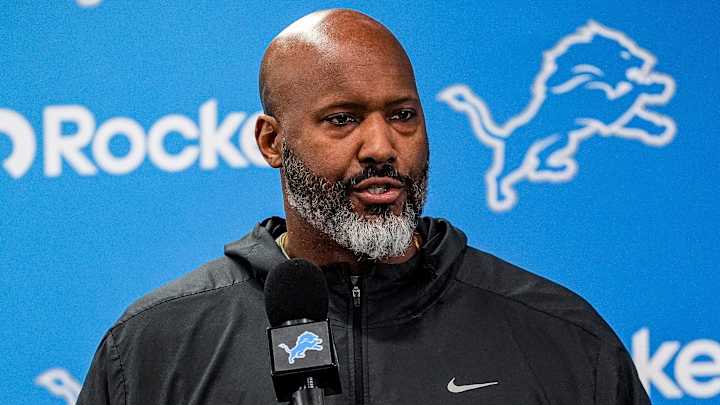
Detroit’s GM didn’t just explain the John Morton breakup — he subtly revealed the blueprint for who comes next.
The Detroit Lions didn’t waste time after their 2025 season unraveled. Offensive coordinator John Morton was dismissed just days after the finale, ending a brief, turbulent tenure that saw head coach Dan Campbell seize play-calling duties midseason. But in explaining why the move happened so quickly, general manager Brad Holmes may have accidentally told everyone exactly where the Lions are looking next.
His words weren’t dramatic. They were measured, respectful — and deeply revealing.
“In this business, in these chairs, you have to make some really tough decisions,” Holmes said. “Look, Johnny did a lot of good things with us this time around and the first time around. We’re appreciative of all of his efforts and everything that he put into it.
But, look, there is a time where you just have to make a decision, especially when candidates are becoming available. You have to just make the tough decision to move forward and move on.”
Those final lines weren’t about Morton. They were about opportunity — and urgency.
Reading Between the Lines
Holmes made it clear the Lions were not firing Morton in a vacuum. The phrase “especially when candidates are becoming available” is the tell. Detroit wasn’t reacting to failure alone; it was positioning itself to strike while high-end offensive minds are suddenly on the market.
He also emphasized that the next coordinator doesn’t have to be an established play-caller. Instead, he stressed qualities that seemed like a veiled critique of what Detroit just experienced — leadership, being detail-oriented, and having command over the room.
That trio of traits doesn’t describe a young position coach climbing the ladder. It describes former head coaches.
The Three Names Written All Over This
When Holmes talks about availability, leadership, and room-command, three candidates immediately jump to the front of the line.
Mike McDaniel — The Immediate Spark
Detroit reportedly showed instant interest when McDaniel was fired in Miami. His offensive creativity is unquestioned, and his reputation as a culture-setter fits Holmes’ language about leadership. If McDaniel is willing to reset as a coordinator, he may be the dream swing.
Kevin Stefanski — The Steady Hand
The former Browns head coach has run top-tier offenses and carries the kind of structure Detroit’s front office covets. Stefanski’s detail-driven approach mirrors the traits Holmes highlighted — someone who can impose clarity, not just call clever plays.
Kliff Kingsbury — The Wild Card
Stylistically, Kingsbury isn’t an obvious fit, but he checks the boxes Holmes seemed to underline: proven offensive mind, former head coach, and unquestioned authority in a room. When Holmes says experience calling plays isn’t mandatory, that doesn’t eliminate Kingsbury — it reframes him as a leadership hire, not just a scheme hire.
Why Detroit Can’t Afford Another Miss
This isn’t a cosmetic decision. Detroit went from a 15-2 powerhouse to a 9-8 disappointment in one year. The roster is still loaded. The window is still cracked open. But another whiff at offensive coordinator could slam it shut.
Holmes and Campbell are aligned more tightly than almost any GM-HC duo in football. That means this search won’t be about comfort or nostalgia. It will be about presence — the ability to command elite players, manage egos, and bring coherence back to a unit that felt adrift for much of 2025.
And when Holmes talks about making hard decisions because candidates are becoming available, he’s not speaking hypothetically.
He’s already hunting.