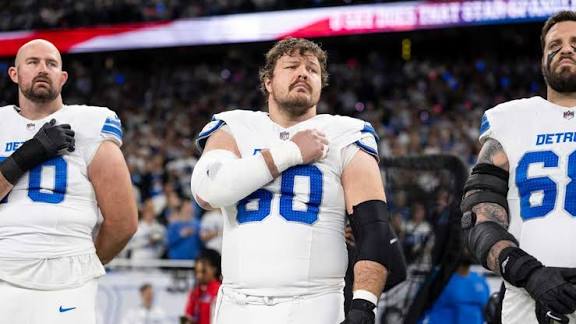
As the Detroit Lions enter a pivotal offseason, one of the biggest questions facing the front office revolves around the offensive line — and specifically Graham Glasgow’s future. While Glasgow has been a valuable, versatile veteran for Detroit, the financial implications tied to keeping aging linemen have forced the Lions to think strategically.
And quietly, Detroit may already have an answer inside the building.
With the NFL salary cap continuing to rise, teams that win consistently are the ones that replace expensive veterans before decline hits, not after. For the Lions, identifying an in-house replacement for Graham Glasgow could help them avoid committing tens of millions of dollars over the next several seasons — potentially saving up to $70 million in long-term cap flexibility when compared to extending or replacing him via free agency.
Glasgow has been reliable, tough, and flexible across the interior line, but he is entering the later stages of his career. Detroit must weigh his leadership and experience against the reality of age, durability, and future cost. Veteran interior linemen rarely get cheaper — and the Lions already have significant money tied up in their offensive core.
That’s where an internal replacement becomes crucial.
Detroit has quietly invested in developmental linemen over recent seasons, grooming younger, cheaper players who understand the system and can step in without the learning curve that comes with outside free agents. If one of those players proves capable of handling a starting role, the Lions could avoid both an expensive extension and a costly external signing.
The financial ripple effect would be massive.
By promoting from within, Detroit would:
Maintain continuity on the offensive line
Preserve cap space for premium positions like edge rusher, cornerback, and wide receiver
Avoid overpaying in a weak free-agent interior OL market
Extend their competitive window around Jared Goff
This isn’t about disrespecting Glasgow’s contributions. It’s about timing and roster balance. The Lions are at a crossroads where smart cap management could determine whether they take the next step or get stuck in the middle of the NFC.
If Detroit believes its in-house option is ready, the move would signal confidence in player development — and a willingness to be proactive rather than sentimental.
One decision at guard could quietly shape the Lions’ entire offseason strategy.
And if the replacement works?
Detroit won’t just fill a spot — they’ll protect their future.
Lions Face Major Financial Fork in the Road as In-House Glasgow Replacement Emerges