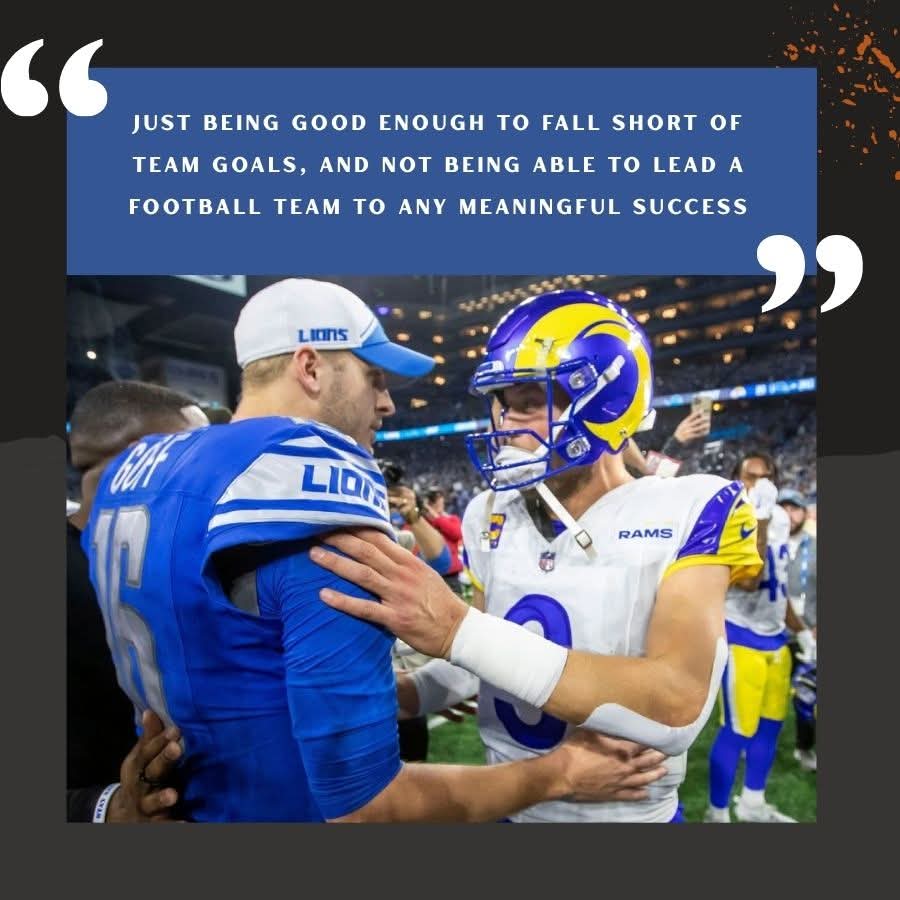
When Matthew Stafford moved on from Detroit, the reaction was predictable: frustration, sadness, and a familiar sense of loss. The Lions had just parted with the most talented quarterback in franchise history, and for many fans, it felt like another step backward. With time, though, the truth has become harder to ignore — Stafford leaving didn’t break the Lions. It freed them.
For years, Detroit lived in football purgatory. Stafford was good enough to keep the team competitive, but the roster around him was never built to sustain real success. Close games masked deeper issues, and the organization avoided the kind of complete teardown it desperately needed. As long as Stafford was there, the Lions kept trying to patch holes instead of fixing the foundation.
Once he was gone, there was nowhere left to hide. Detroit embraced a full reset, stockpiling draft picks, committing to youth, and aligning the front office and coaching staff around a shared vision. Brad Holmes focused on building through the trenches. Dan Campbell reshaped the culture. Accountability replaced excuses.
The result is a Lions team that no longer relies on one star to carry everything. This version is deeper, tougher, and built to last — capable of surviving injuries, pressure moments, and late-season adversity. Ironically, Stafford leaving helped both sides: he found success elsewhere, while Detroit finally found itself.
Calling it the “best thing that ever happened” may sound harsh, but history tends to reward hard truths. The Lions didn’t lose their franchise quarterback — they gained a future.
